2026-10-02
Building Stronger Data Foundations: The Now, Next and Later

In almost every client pitch, data summit, and marketing conference lately, one term keeps dominating the discussion: Data Strength. But beyond the buzzword, what does building real data strength actually look like in practice?
In our recent webinar “Data Strength & You”, our host Juliana Jackson (AI Strategy & Growth Director, Jellyfish), was joined by industry measurement leaders to discuss building resilient data foundations:
- Alice Crawley, Data Tech and Industry Manager at Google, provided the strategic Google perspective on shifting from reactive tracking fixes to durable first-party data strategies that maximize AI bidding performance and protect long term competitive edge.
- Manpreet Gill, Analytics Director at Jellyfish, provided the hands-on agency and implementation perspective on data governance, conversion value optimization, and aligning internal marketing, legal, and IT teams.
Defining Data Strength
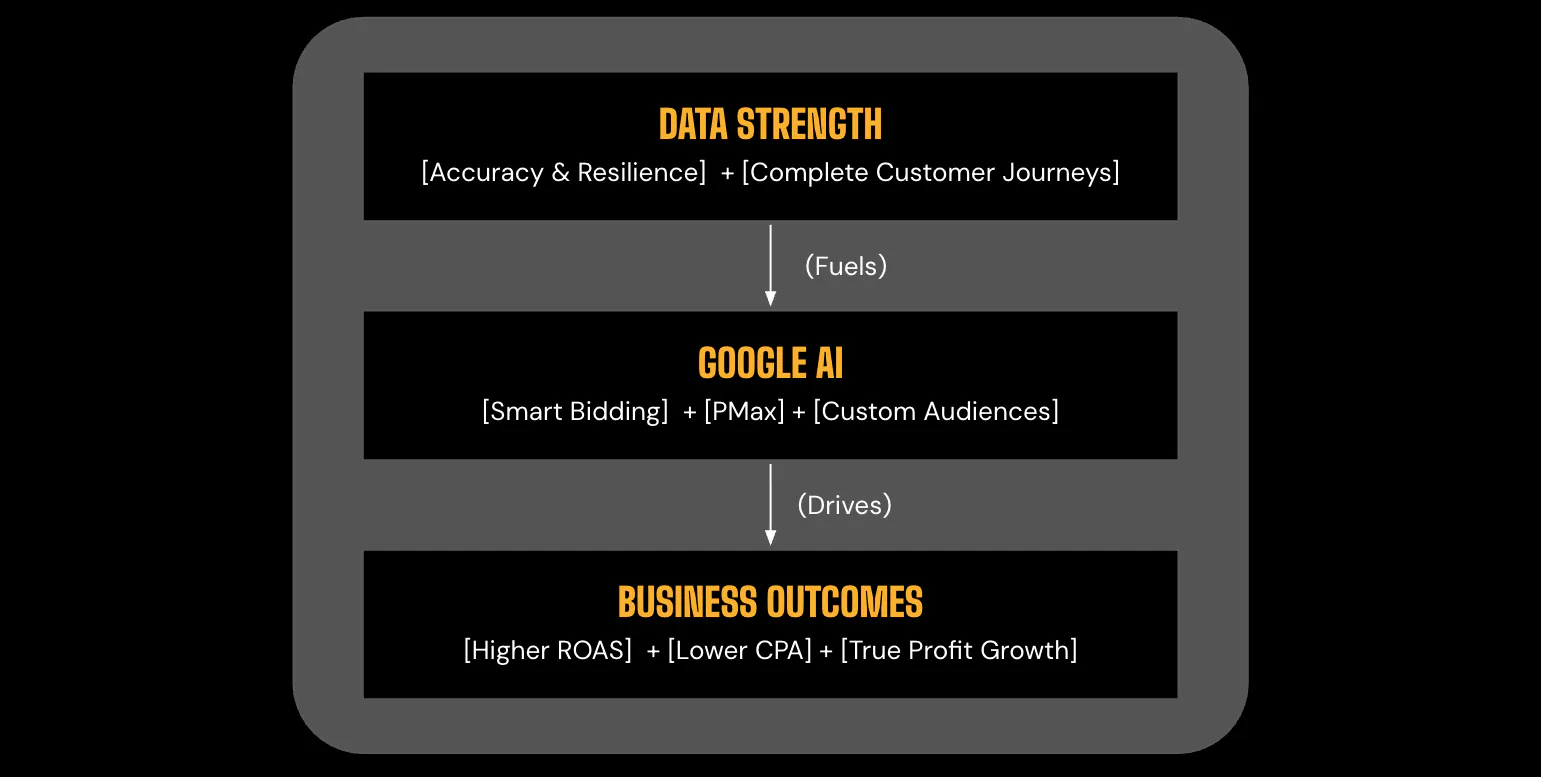
Modern marketing runs on AI and smart bidding, but AI is only as good as the data fed into it.
Alice Crawley explained Data Strength is about making sure that the fuel feeding into AI and smart bidding is high quality rather than incomplete. It is about accuracy, resilience, and capturing whole customer journeys across online and offline channels in a durable, privacy-safe way that won't break when technology shifts.
Because competitors have access to the exact same AI tools like Performance Max, your own first-party data is what creates your competitive edge. It ensures algorithms optimize toward your actual business profit, rather than generic volume.
Key Takeaways
Shifting From Data Volume to Data Quality
For a long time, marketers were told they would have to work with less data due to browser changes and privacy updates. That led to a tendency to hoard as many data signals as possible. However, Manpreet Gill pointed out that high data volume is not helpful if those signals lack quality. Advertisers need to focus on accuracy and relevance, ensuring that the signals sent back (such as qualified leads or margin-adjusted purchases) represent true business outcomes.
Breaking Down Internal Silos
One of the biggest blockers to implementing strong data infrastructure is organizational silos. Marketing teams get excited about tools like Google Tag Gateway, but progress stops because they need IT to implement it, or Legal needs to sign off on data usage.
"It's necessary for everyone to be working towards a communal direction, because moving forwards, your organization needs to work more cohesively when it comes to understanding your data, how and where to use it, and ultimately allowing more innovation and creativity in how its used”
Manpreet Gill, Analytics Director, Jellyfish
Actionable Quick Wins for Marketers
Implementing a data strength strategy involves several practical, immediate steps:
- Firing tags in a first party context using Google Tag Gateway, where clients see an average 14% uplift in conversions.
- Passing critical signals such as transaction IDs, session attributes, and identifiers so systems can deduplicate data accurately.
- Auditing primary conversion tags to remove outdated tracking and avoid competing against yourself in bidding models.
In our client implementations across Google Tag Gateway and Data Manager, addressing these foundational quick wins first is what allows downstream AI bidding models to learn significantly faster.
Centralizing Connections With Data Manager
Alice highlighted Google’s Data Manager as a major step forward. Instead of using separate tools and APIs for offline conversions, customer match, or analytics imports, Data Manager brings everything into one place. Marketers can import data once and choose where to send it across Google endpoints, using either a point and click interface or a technical API.
Implementation Roadmap
To help measurement teams turn strategy into execution, Manpreet and Alice shared a practical execution plan during the session:
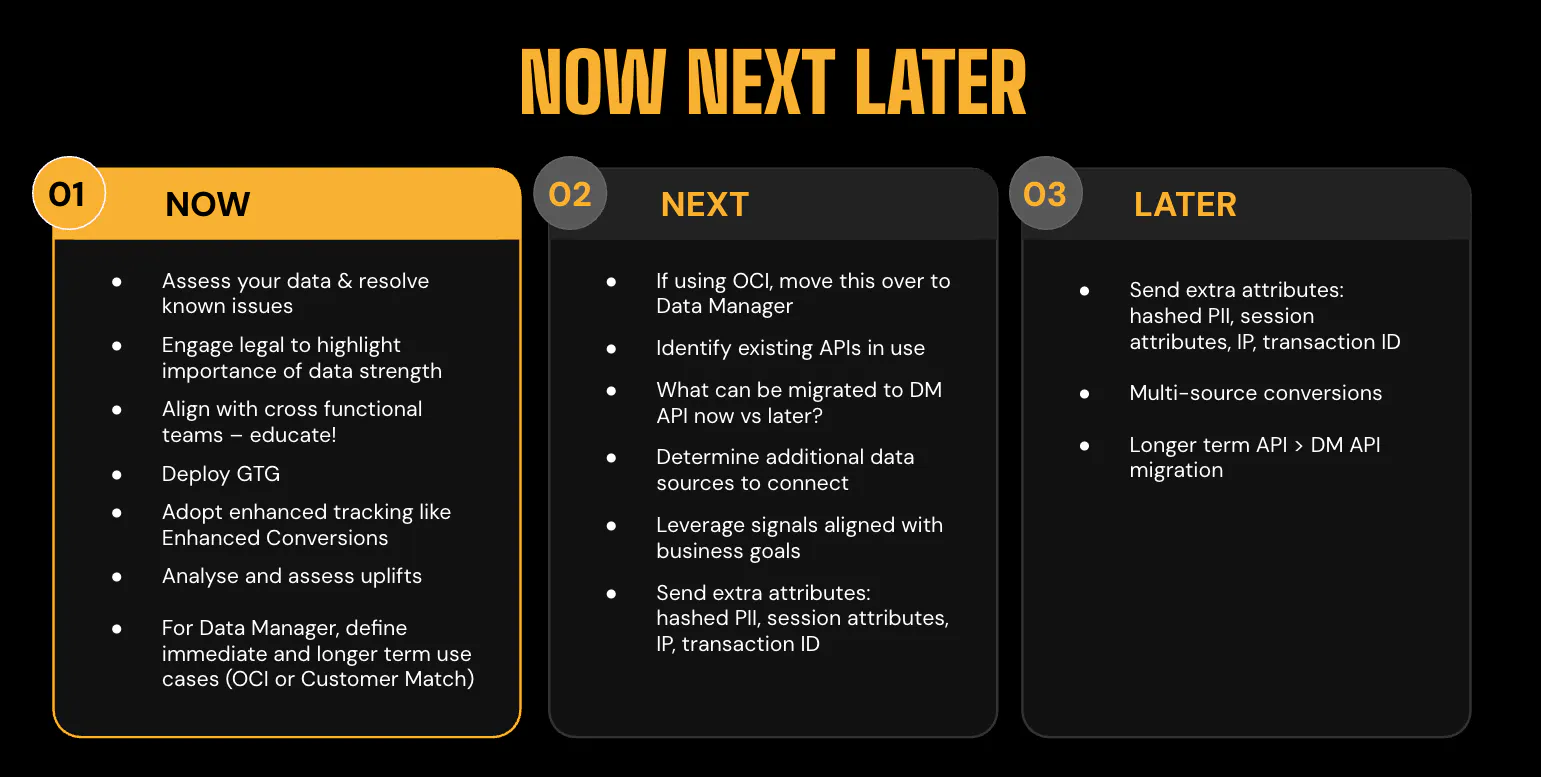
When deploying these updates, it is important to note that AI bidding models require time to adjust. As highlighted by Alice during the discussion, while initial conversion recovery appears in reporting almost immediately, smart bidding algorithms typically take 2 to 4 weeks to process new signals, retrain, and optimize performance.