2026-10-05
Amazon is changing what brands can do with the signals they already have

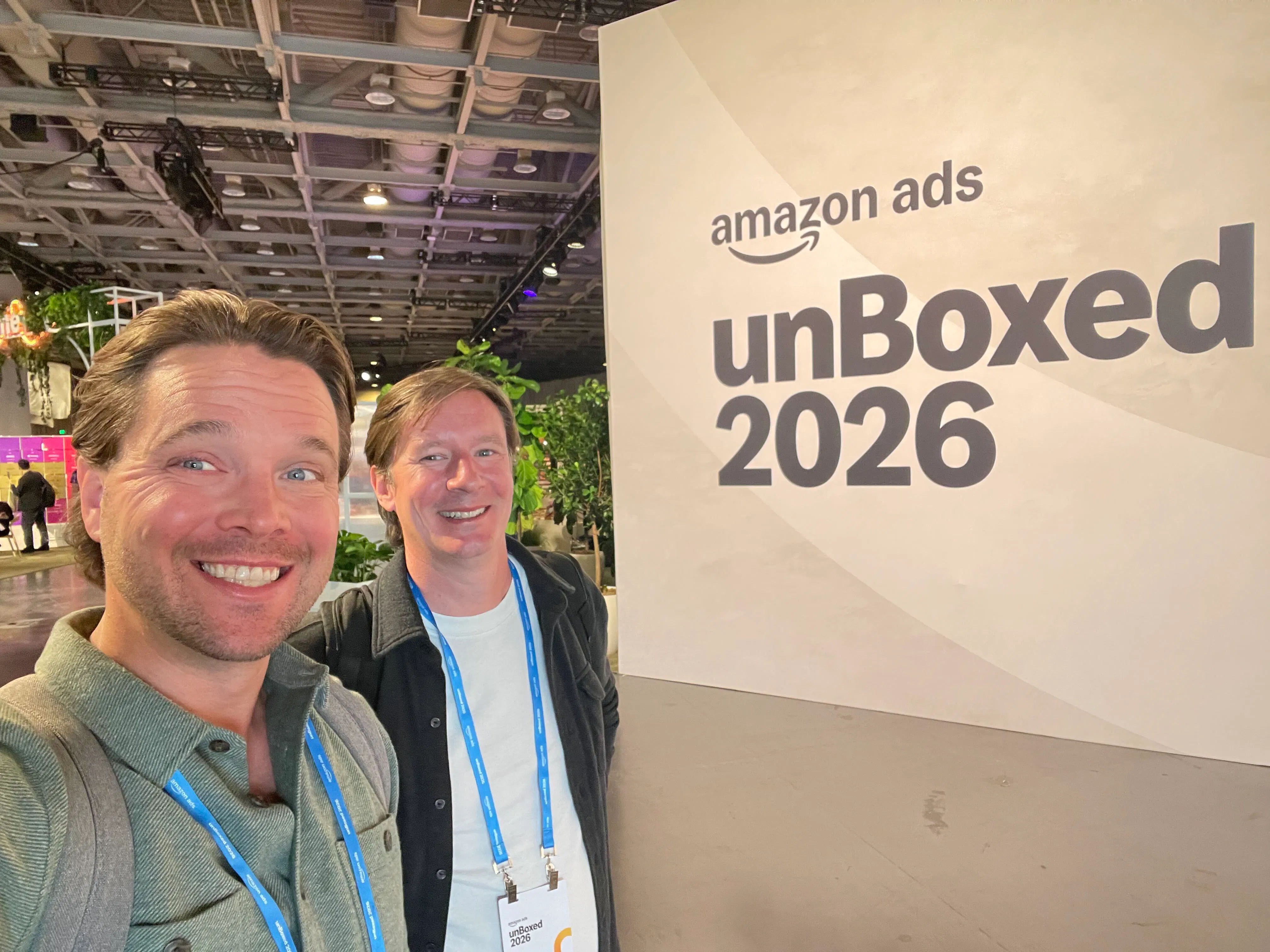
Jellyfish was at Amazon Unboxed, with Zach Gerbrick, VP Partnerships, and James Bourner, VP AdTech Solutions, there in person to see the latest developments firsthand. We’ve looked beyond the headlines to what these changes actually mean for brands heading into holiday season.
Amazon’s latest announcements are less about a dramatic departure from how brands advertise today, and more about building on what already exists. Taken together, the improvements across planning, activation, optimization and shopping are making the ecosystem more connected and reducing the friction between insight and action.
Ads Agent can turn a question into an insight, an insight into a media recommendation and increasingly, a recommendation into an action. Branded Conversations gives AI more brand-specific information to work with when helping shoppers make decisions. New integrations extend that journey beyond Amazon itself.
For brands heading into the holiday season, there are some practical implications.
1. Move from static media plans to responsive ones
Holiday media plans are built months in advance, but in reality the market doesn’t behave that way. A product starts trending, a competitor changes its pricing, a retailer runs an unexpected promotion or a particular audience starts converting better than expected.
The evolution of Ads Agent points towards a different model, where advertisers can increasingly ask what is happening, why it is happening and what they should do about it in the same environment. Agentic media planning could make it easier to reallocate budget, rethink audiences or adjust a full-funnel Amazon plan without rebuilding the strategy from scratch.
For brands, that means responding to the market while the moment still matters.
2. Make AI part of the product consideration strategy
Branded Conversations points to another change that matters. AI is becoming a bigger part of the conversation shoppers have before they buy, and Amazon is giving brands ways to provide the information AI uses when helping them decide.
Product content now has a bigger job than informing a shopper who has landed on your product page. It needs to help AI understand what your product is best for, who it is for, how it differs from competitors and which products solve different needs.
This matters because consideration shapes everything that follows. If AI misunderstands a product, recommends the wrong one for a particular need or misses an important differentiator, that can have a knock-on effect down the funnel, from product engagement through to conversion.
That creates a new area to optimize, and raises a question we are hearing more often: if AI is influencing consideration, how do I know whether my brand is actually winning it?
3. Start measuring the AI shelf before holiday gets competitive
This is where I think we as the industry need to move beyond simply talking about GEO or generative AI optimization.
Search gave brands rankings to measure. Retail gave brands shelf position. Media gave brands reach, frequency and conversion. AI recommendations introduce another layer of visibility.
At Jellyfish, we call this Generative Engine Marketing. Our proprietary tool, Share of Model™ helps marketers understand how often and why a brand or product appears in AI-generated recommendations relative to competitors. Our recent shopping work shows that visibility can vary significantly by AI platform and by the question being asked. A brand can be highly visible for one need and almost invisible for another. For example, as the research shows, ChatGPT accounts for around 80% of AI product recommendations, versus around 20% for Google AI Mode.
There isn’t one AI shelf to optimize for. Different models can give very different answers to the same question, and the landscape is changing quickly. Brands should test across the environments that matter to their category, understand where they are showing up and stay ready to adapt.
That makes AI visibility something brands can start to measure and optimize, rather than simply observe. Before holiday, identify the shopping questions that matter most, see where competitors are taking consideration and understand what information may be influencing those answers.
The process becomes simple: measure how AI sees you, identify the gaps, improve the inputs and measure again.
4. Connect discovery to conversion
Amazon’s ChatGPT integration is another signal worth watching. AI platforms are increasingly becoming places where people research and narrow their choices, while the transaction still happens on Amazon, another retailer or a brand’s own site.
That creates a new challenge for marketers: connecting AI-led discovery with what happens when the shopper actually buys.
AI discovery, retail media, product content and commerce are increasingly different parts of the same journey. Understanding how those signals connect will give brands a clearer view of what is influencing the path to purchase.
For holiday planning, brands should focus on four things:
- Use AI to react faster: Identify performance shifts and act on them while they matter.
- Optimize the information AI uses: Make sure product content clearly communicates what your products do, who they are for and why they are different.
- Measure AI consideration: Understand which shopping questions generate recommendations for your brand and where competitors are taking visibility.
- Connect the signals: Use what you learn about AI-led consideration to inform content, commerce and media decisions.
The interesting part of these updates isn’t any one new tool. It’s how much closer they bring the shopper’s question, the brand’s data, the media plan and the eventual purchase. With holiday coming up, brands have a window to understand where they are showing up in AI-led recommendations, what is shaping those answers and how that could impact their category as the levers for increasing visibility continue to evolve.